Why 90% of Traders Lose Money: Trading Psychology Explained (Beginner to Pro Guide 2026)
Alex on 26 February, 2026 | No Comments

Why 90% of Traders Lose Money (Psychology Explained)
Trading looks simple from the outside.
You open a chart.
You click buy or sell.
You wait.
You make money.
But reality is different.
Statistics and broker reports consistently show that the majority of retail traders lose money — especially in high-risk markets like Forex market, cryptocurrency market, and stock market.
The reason is not strategy.
It’s not indicators.
It’s not lack of information.
The real reason?
👉 Psychology.
In this detailed guide, you’ll understand exactly why most traders fail — and how you can avoid becoming part of that 90%.
The Hard Truth: Trading Is a Psychological Game
Most beginners think trading is about:
- Finding the perfect indicator
- Copying a profitable strategy
- Joining a signal group
- Learning chart patterns
But professional traders know something different:
Trading is 80% psychology and 20% strategy.
Even the best strategy will fail if your emotions control your decisions.
1️⃣ Fear: The Silent Profit Killer
Fear is the first psychological enemy.
It appears in different forms:
• Fear of Losing
You close trades too early.
You avoid valid setups.
You hesitate and miss opportunities.
• Fear of Missing Out (FOMO)
You jump into trades late.
You enter after big green candles.
You ignore your trading plan.
FOMO is especially common in the cryptocurrency market, where price moves are fast and aggressive.
Example:
Bitcoin pumps 10%.
You think: “If I don’t enter now, I’ll miss the move.”
You enter at the top.
The market reverses.
You panic sell.
Loss.
2️⃣ Greed: The Account Destroyer
Greed is more dangerous than fear.
Greed makes you:
- Remove stop losses
- Increase lot size
- Overtrade
- Hold winners too long
- Turn small profits into losses
Instead of taking consistent 2–3% gains, traders aim for 50% in one trade.
That’s gambling — not trading.
Greed is why small accounts get wiped out quickly.
3️⃣ Overtrading: The Addiction Problem
Many traders feel they must trade every day.
But markets don’t give high-quality setups every day.
Overtrading happens when:
- You are bored
- You want to recover losses
- You feel emotional
- You want “action”
Professional traders wait.
Amateurs chase.
Overtrading increases:
- Commission costs
- Emotional stress
- Bad decision-making
And slowly drains your account.
4️⃣ Revenge Trading: Emotional Destruction
You lose one trade.
You feel angry.
You immediately open another trade — bigger lot size.
You say:
“I will recover my loss.”
This is revenge trading.
And it usually ends in bigger losses.
Trading decisions made from anger are never logical.
5️⃣ Lack of Risk Management
Most traders focus on entry.
Professionals focus on risk.
If you risk 20% per trade, you only need five bad trades to destroy your account.
But if you risk 1–2% per trade, you can survive long losing streaks.
Psychologically weak traders:
- Ignore stop loss
- Move stop loss further
- Risk too much per trade
And eventually, their account hits zero.
📊 Emotional Cycle of a Losing Trader

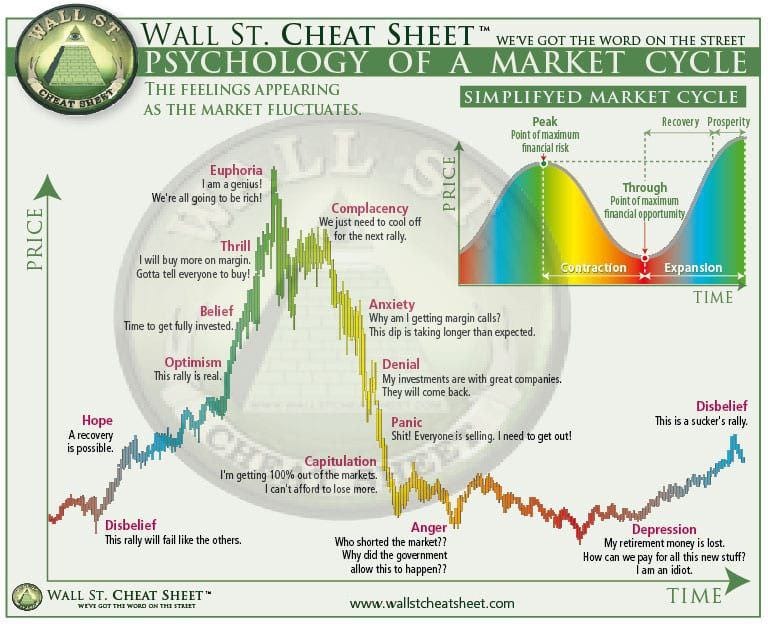

4
Most traders go through this emotional cycle:
- Excitement
- Overconfidence
- Greed
- Anxiety
- Fear
- Panic
- Capitulation
Then they quit.
Understanding this cycle helps you break it.
6️⃣ Overconfidence After Small Wins
One of the most dangerous phases:
You win 3 trades in a row.
You feel like a genius.
You increase position size.
You ignore rules.
Then one big loss removes all profits.
Winning streaks are psychologically dangerous if you lack discipline.
7️⃣ No Trading Plan
Imagine driving without a map.
That’s how most traders operate.
They don’t have:
- Entry rules
- Exit rules
- Risk percentage
- Defined strategy
- Journal tracking
They trade based on feeling.
And feelings are unstable.
8️⃣ Social Media & Signal Dependency
Many traders rely on:
- Telegram signals
- YouTube predictions
- Twitter/X opinions
They don’t develop independent thinking.
When signals lose, they blame others.
Successful traders take full responsibility.
9️⃣ Unrealistic Expectations
Beginners expect:
- 100% monthly returns
- Financial freedom in 3 months
- No losing trades
When reality hits, frustration begins.
Professional traders aim for:
- 3–10% monthly returns
- Long-term consistency
- Controlled risk
Slow growth wins.
🔟 Lack of Patience
Patience is rare.
Many traders:
- Close trades early
- Enter before confirmation
- Change strategies weekly
Consistency requires patience.
You can’t master trading in 30 days.
How to Join the 10% That Win
Now the important part.
How do you avoid these psychological traps?
✅ 1. Follow the 1% Risk Rule
Never risk more than 1–2% per trade.
This protects your capital and your emotions.
✅ 2. Create a Trading Plan
Your plan must include:
- Entry conditions
- Stop loss rule
- Risk management
- Target strategy
- Maximum daily loss
No plan = gambling.
✅ 3. Keep a Trading Journal
Write:
- Why you entered
- Why you exited
- Emotional state
- Mistakes made
Self-awareness improves discipline.
✅ 4. Accept Losses
Losses are normal.
Even professional traders lose 40–50% of trades.
Profitability comes from:
Risk-reward ratio + discipline.
✅ 5. Focus on Process, Not Profit
If you focus only on money:
You become emotional.
If you focus on execution:
Money becomes a result.
Final Thoughts: Trading Is a Mental Game
Why do 90% of traders lose money?
Because:
- They are emotional
- They lack discipline
- They risk too much
- They chase profits
- They ignore psychology
Trading is not about being right.
It’s about managing risk and managing yourself.
If you master your emotions, you automatically move closer to the top 10%.
Frequently Asked Questions (SEO Boost Section)
Q1: Is trading gambling?
Trading without a plan and risk management is gambling. Professional trading is structured and risk-controlled.
Q2: Can beginners become profitable?
Yes, but only with discipline, proper education, and emotional control.
Q3: How long does it take to become consistent?
For most traders, 1–3 years of serious practice.
Risk Disclaimer
Trading involves significant financial risk. You may lose some or all of your invested capital. Always conduct your own research and consult a financial professional before making investment decisions.